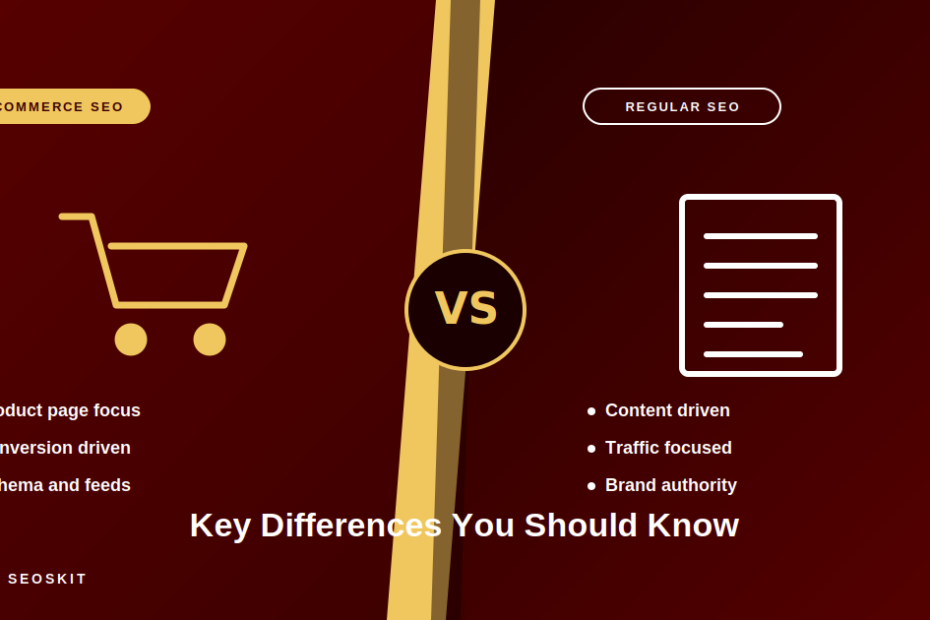
SEO is SEO, right? Not exactly. While the core principles are the same, eCommerce SEO and regular SEO are quite different in practice. If you run an online store and use generic SEO tactics, you may be leaving a lot of traffic — and revenue — on the table.
Here is a clear breakdown of how they differ and why it matters for your business.
The Core Difference
Regular SEO is typically about ranking content — blog posts, service pages, landing pages. The goal is usually to inform, generate leads, or build brand awareness.
eCommerce SEO is about ranking product and category pages at scale. The goal is direct sales. Every optimization decision is tied to converting a visitor into a buyer.
Key Differences Between eCommerce SEO and Regular SEO
1. Volume of Pages
A typical business website might have 10 to 50 pages. An eCommerce store can have thousands — sometimes tens of thousands — of product and category pages. Each one needs to be optimized, crawlable, and indexed correctly. This scale requires a different approach entirely.
2. Keyword Intent
In regular SEO, you often target informational keywords — things like ‘how to do X’ or ‘what is Y.’ In eCommerce SEO, the focus is on transactional and commercial keywords. These are searches like ‘buy X online,’ ‘best X under $50,’ or ‘X free shipping.’ These keywords signal buying intent.
3. Duplicate Content Challenges
eCommerce stores face a constant battle with duplicate content. Many products have similar descriptions, and filters or sorting options can create hundreds of near-identical URLs. Without proper handling — using canonical tags, noindex tags, or parameter controls — these can seriously hurt your rankings.
A specialist eCommerce SEO agency knows how to manage these issues at scale.
4. Product Page Optimization
Optimizing a product page is very different from optimizing a blog post. You need to write unique descriptions that include target keywords, add structured data for rich snippets, optimize images, and make the page fast and easy to use on mobile.
5. Category Page Strategy
Category pages are often the highest-traffic pages on an eCommerce site. Regular SEO rarely deals with this type of page. Getting category pages to rank requires a specific approach to content, internal linking, and keyword targeting that most general SEO strategies do not cover.
6. Site Architecture
The structure of an eCommerce site is far more complex than a regular website. Products sit within categories, which sit within departments. Getting this structure right — and making sure Google can navigate it efficiently — is critical for rankings.
7. Schema Markup
eCommerce sites benefit greatly from product schema markup. This tells Google about prices, availability, ratings, and reviews — and can earn rich snippets in search results that significantly boost click-through rates. This is rarely needed on regular websites.
Why You Need an eCommerce SEO Specialist
Using a general SEO strategy on an eCommerce store is like using a standard recipe for a specialized dish — it might work a little, but you will not get the best results.
Working with a dedicated eCommerce SEO agency means your strategy is built around the specific challenges and opportunities of selling online.
Final Thoughts
eCommerce SEO and regular SEO share the same foundation but require very different execution. If you want your online store to rank and grow, you need a strategy designed specifically for eCommerce — not a one-size-fits-all approach.