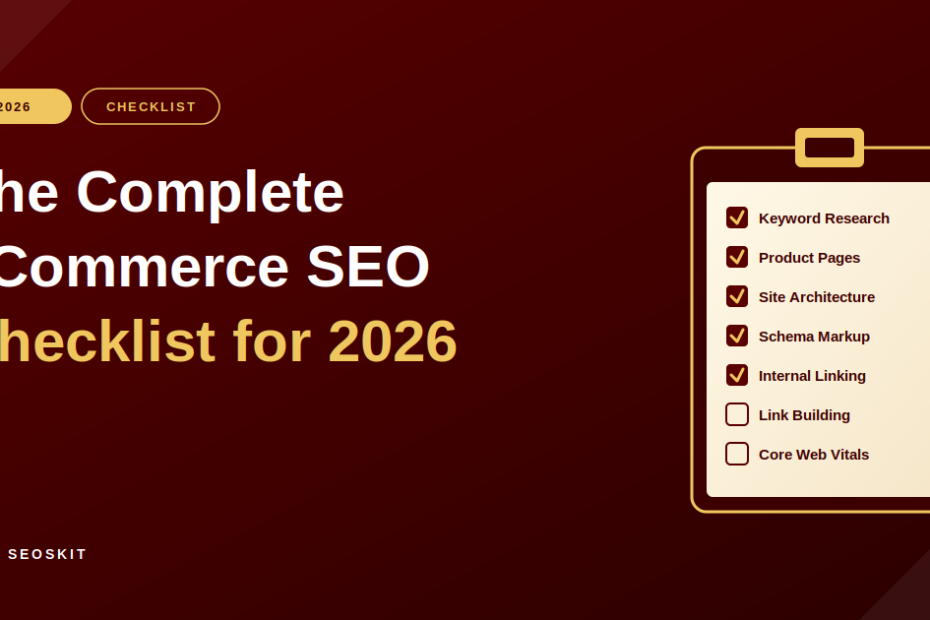
Whether you are launching a new store or improving an existing one, having a clear SEO checklist helps you stay organized and cover every important area.
This checklist covers everything from technical setup to content and link building. Work through it step by step and you will have a strong SEO foundation in place.
1. Technical SEO
Technical SEO is the backbone of everything else. Without it, even great content will not rank.
Site Speed
Make sure your store loads in under three seconds on both desktop and mobile. Use tools like Google PageSpeed Insights or GTmetrix to identify what is slowing your site down. Common fixes include compressing images, enabling browser caching, and using a content delivery network (CDN).
Mobile Optimization
More than half of all eCommerce traffic comes from mobile devices. Your store must look great and work perfectly on small screens. Google uses mobile-first indexing, which means it ranks your mobile version first.
HTTPS
Make sure your site uses HTTPS. This is a basic trust and security signal. Most eCommerce platforms handle this automatically, but double-check that all pages load securely.
Crawlability
Check your robots.txt file and XML sitemap to make sure Google can crawl and index your important pages. Block pages you do not want indexed — like checkout and account pages — but make sure product and category pages are fully accessible.
Fix Duplicate Content
Use canonical tags to tell Google which version of a page is the original. This is especially important for product variants, filter pages, and sorted category views.
2. Keyword Research
Build a keyword map that covers every important product, category, and topic on your site.
Target transactional keywords for product pages (e.g., ‘buy X online’). Use broader category keywords for category pages (e.g., ‘men’s running shoes’). Add informational keywords for blog content (e.g., ‘how to choose running shoes’).
Working with a professional eCommerce SEO agency can help you build a complete keyword map that covers your entire product catalogue.
3. On-Page SEO
Product Pages
Write unique product titles that include your target keyword. Write original product descriptions — never copy from the manufacturer. Add alt text to every product image. Include customer reviews to add fresh, unique content.
Category Pages
Add a short introductory paragraph with your target keyword. Use clear, keyword-rich headings. Include internal links to related categories and top products.
Meta Titles and Descriptions
Write a unique meta title (under 60 characters) and meta description (under 155 characters) for every important page. Include your target keyword naturally. Make them compelling — these are your ads in the search results.
4. Site Structure and Internal Linking
Use a clear, logical site structure: Homepage → Category → Subcategory → Product. No important page should be more than three clicks from the homepage.
Use internal links to connect related products and categories. This spreads link authority across your site and helps Google understand how your pages relate to each other.
5. Schema Markup
Add product schema to your product pages. This can earn rich snippets showing price, availability, and star ratings directly in Google search results — which significantly increases click-through rates.
6. Content and Blog
Publish buying guides, comparison posts, and how-to articles that target research-phase keywords. These pages attract shoppers earlier in their buying journey and funnel them toward your products.
7. Link Building
Earn backlinks from relevant industry blogs, product review sites, and digital PR coverage. The more trusted websites link to your store, the more authority Google gives you.
8. Tracking and Analytics
Set up Google Search Console and Google Analytics. Track keyword rankings, organic traffic, conversion rate, and revenue from organic search. Review these numbers monthly and use the data to guide your strategy.
Final Thoughts
SEO is not a one-time task — it is an ongoing process. Use this checklist as a foundation, then keep building on it. The eCommerce SEO agency teams that drive the best results are the ones that stay consistent and keep optimizing over time.